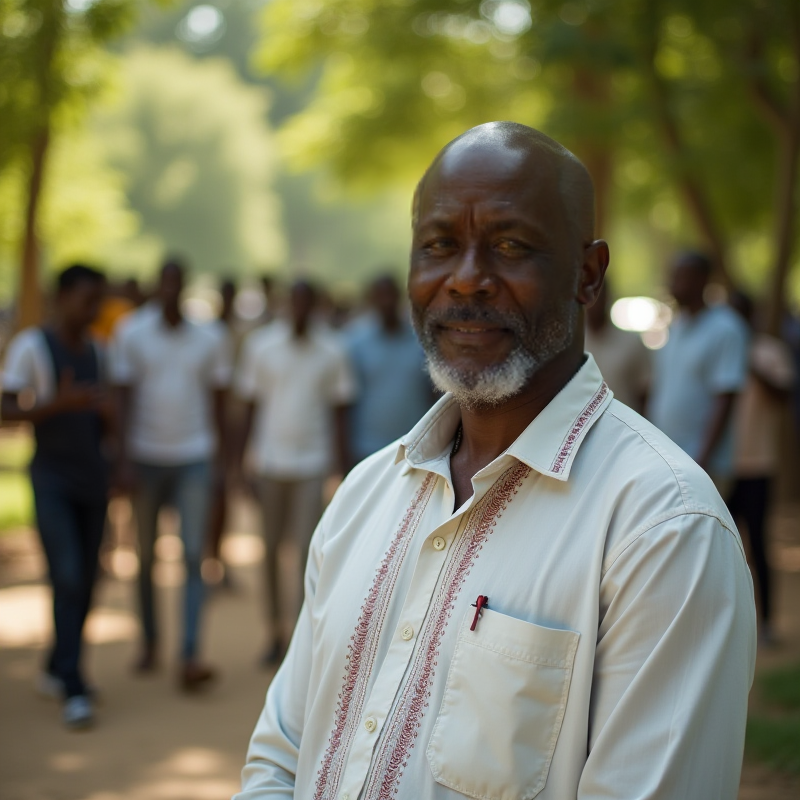
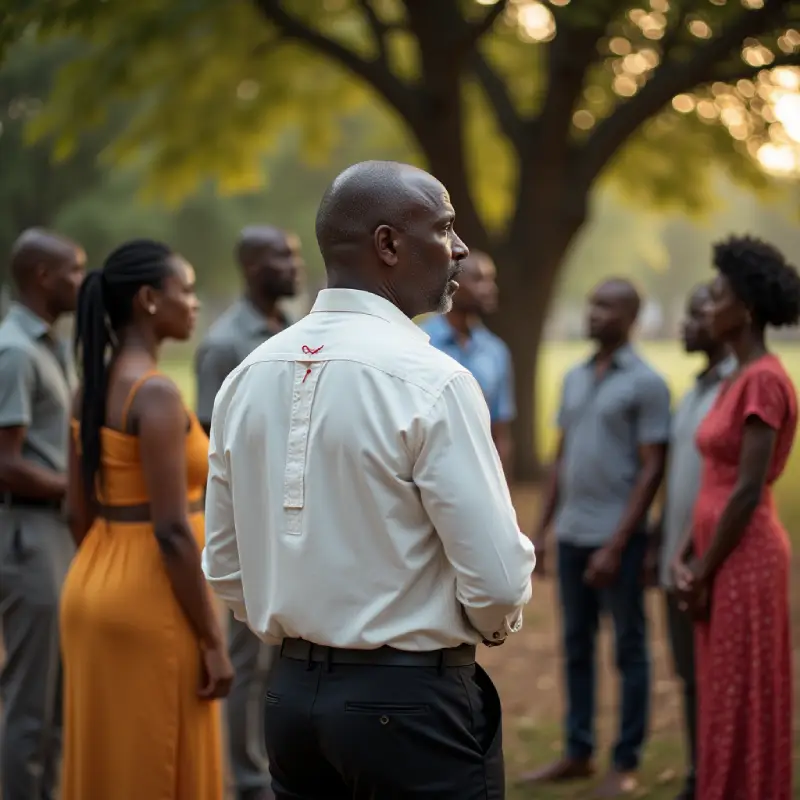
This text is a talk given by Abba Ireati to a large gathering of his family, followers and friends in Abuja, Nigeria.
Assalamu alaikum, my dear children, my beloved grandchildren, and indeed, my worldwide family gathered here today. Come closer, gather around your old Abba Ireati. Let the warmth of our shared humanity fill this space, just as the evening sun paints the Nigerian sky with hues of amber and gold. Can you feel it? This sense of togetherness, this bond forged not just by blood, but by the very spirit of seeking knowledge and truth.
Today, my heart yearns to share with you a tale — a pearl drawn from the secret wisdom of Musa and Al-Khidr, plucked from the sacred gardens of our faith. It’s a story not just for the ears, but for the soul, one that speaks of patience, of trust, of seeing beyond the obvious, and of the profound, mysterious hand of the Divine that guides our very footsteps. Sit back, my little ones, let your imaginations soar, and perhaps, just perhaps, you will find a piece of yourselves within this ancient narrative.
This is a story about a great Prophet, a mighty Messenger of Allah, by the name of Musa—may peace be upon him. Now, you know Musa, don’t you? The one who spoke directly to Allah, who led his people through the parted sea, who brought down the Ten Commandments. A man of immense power and unwavering faith! But even such a towering figure, children, understood that the wellspring of knowledge is endless, and one must always remain a humble student.
The Journey to Find the “Green Man”
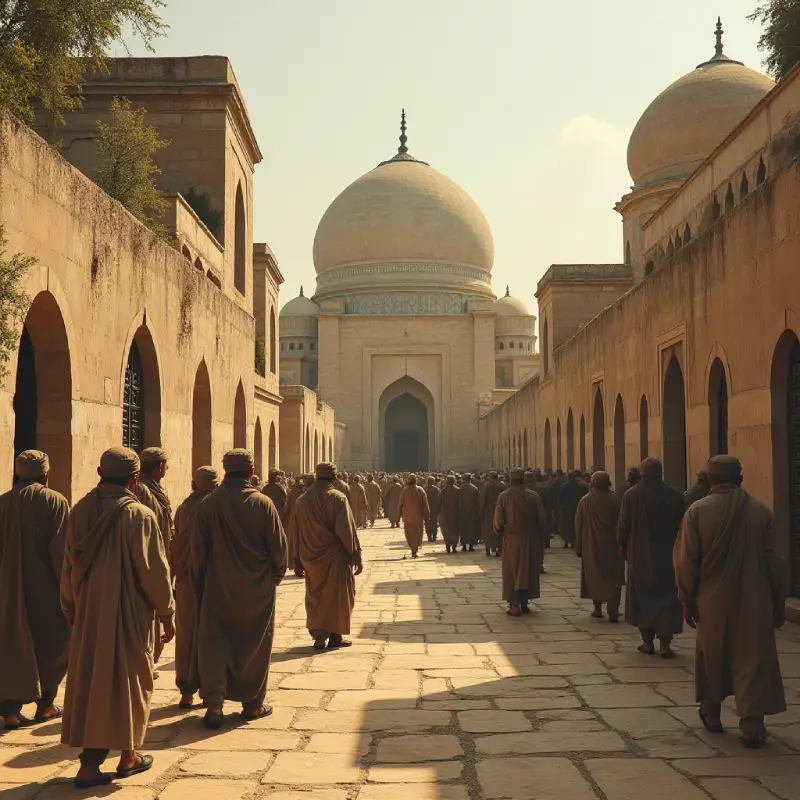
One day, Musa, in his deep thirst for spiritual understanding, felt a yearning to meet someone even wiser than himself, someone imbued with a secret knowledge directly from Allah. Allah, in His infinite mercy, revealed to Musa that there was such a servant, a mysterious figure known as Al-Khidr, “The Green Man,” living at the junction of the two seas.
Imagine, my children, the determination in Musa’s heart! He wasn’t content to rest on his laurels. He knew that true personal growth means constantly striving, always learning, always pushing the boundaries of what you think you know. So, with a young companion, he set off on a long, arduous journey. Day after day, they walked, their feet tired, their provisions dwindling, but Musa’s spirit remained resolute. He carried with him a fish as their sustenance, with a divine sign that where the fish disappeared, there they would find Al-Khidr.
Finally, after what seemed like an eternity, they reached a rocky shore, a place where two great bodies of water met. As Musa rested, his companion, weary from the journey, forgot about the fish. And behold! A miracle occurred. The fish, which had been dead, suddenly came to life and miraculously slipped out of their basket, making its way into the sea, leaving a trail like a tunnel through the water! What a sight that must have been! But they were so exhausted, they didn’t immediately grasp the significance. It wasn’t until they had walked further, and Musa asked for food, that his companion remembered the extraordinary event.
Musa’s eyes widened. “That,” he exclaimed, “is the very place we were seeking!” With renewed energy, they retraced their steps, following the winding path back to the junction of the two seas. And there, my dears, by a large rock, they found him. A venerable man, serene and wise, sitting alone. This was Al-Khidr.
The First Test: The Damaged Boat
Musa, with deep reverence, approached him. “May peace be upon you,” he said. “I have come to you so that you may teach me some of the guidance and wisdom that you have been taught.”
Al-Khidr looked at Musa, his eyes deep and knowing. “Indeed, Musa,” he replied gently, “you will not be able to have patience with me. How can you be patient with that which you have not encompassed in knowledge?”
But Musa, seeing his earnest desire, agreed to the condition: he would not ask about anything until Al-Khidr himself mentioned it. This, my dear ones, is the first great lesson Abba Ireati wants you to grasp: true wisdom often requires us to suspend our immediate judgment, to trust that there is a bigger picture we cannot yet see.
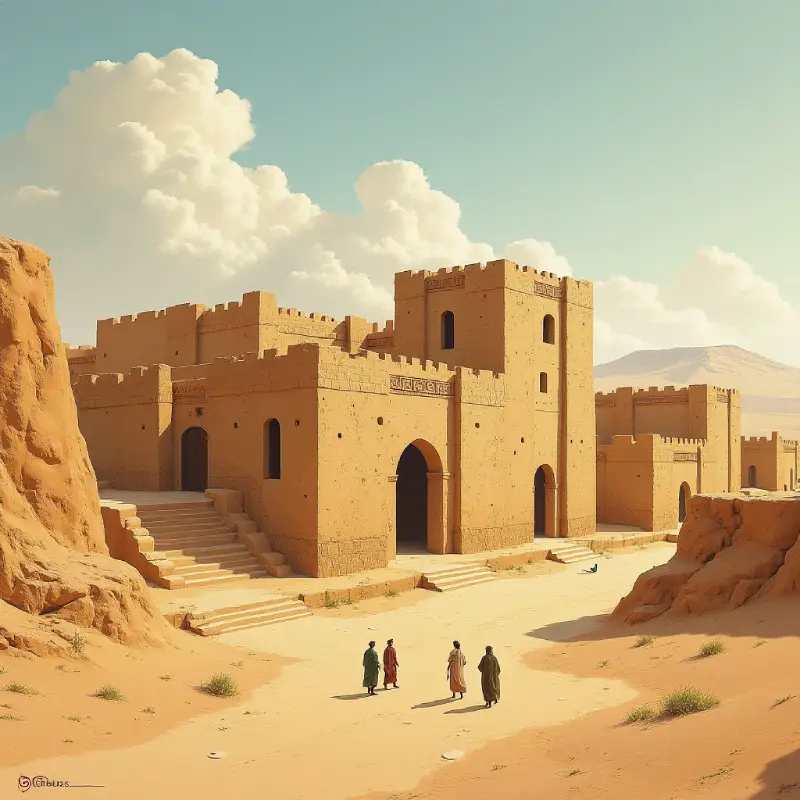
So, the two set off. They walked along the shore until they found a boat. The boatmen, recognizing Al-Khidr, allowed them to board without payment—a kindness, a gesture of respect. As they sailed smoothly across the tranquil waters, Musa’s heart was light. But then, as the journey progressed, Al-Khidr did something truly shocking. With his bare hands, he deliberately ripped out one of the planks from the side of the boat, making a hole in its structure!
Musa’s eyes widened in horror. “What have you done?!” he exclaimed, unable to contain himself. “You have damaged the boat, endangering its owners and everyone on board! This is truly a dreadful thing!” He had promised not to question, but this… this seemed utterly wrong, a malicious act!
Al-Khidr simply looked at him, a gentle, knowing look. “Did I not tell you that you would not be able to have patience with me?”
Musa, remembering his promise, hung his head in shame. “Forgive me for my forgetfulness, and do not burden me with difficulty in my affair.” He promised to be more patient.
The Second Test: The Killed Boy
They disembarked and continued their journey, walking through a small village. As they passed by, they saw a group of young boys playing joyfully in the street. One boy, handsome and full of life, caught Al-Khidr’s eye. And then, to Musa’s utter disbelief, Al-Khidr seized the boy, dragged him aside, and killed him!
“Oh my Allah!” Musa cried out, his voice filled with anguish and fury. “You have killed an innocent soul, one who has not taken any life! This is an atrocity, a most heinous crime!” His heart was pounding. How could he remain silent in the face of such injustice?
Again, Al-Khidr calmly responded, “Did I not tell you that you would not be able to have patience with me?”
Musa, though still reeling from the shock, felt a wave of remorse for breaking his promise twice. “If I ask you about anything after this,” he declared, “then do not keep me as your companion. You will then have a reason from me.” He was determined to hold his tongue, no matter how perplexing Al-Khidr’s actions might be. This, my dear ones, is another profound lesson for personal growth: sometimes, the greatest challenges to our understanding are precisely what are meant to deepen our faith and our humility.
The Third Test: The Rebuilt Wall
They continued their journey, their path leading them to yet another village. Exhausted and hungry, they sought hospitality from the villagers. But alas, these people were unwelcoming and refused to host them or offer them any food. It was a disheartening experience, to be turned away by those who should have offered kindness. As they prepared to leave this inhospitable place, Al-Khidr noticed a wall in the village that was crumbling, on the verge of collapse. And without a word, he began to rebuild it, carefully replacing stones, making it sturdy and strong once more!
Musa watched, utterly bewildered. They had been treated so poorly, refused even a morsel of bread, yet Al-Khidr was now performing a free service for these unkind people! “If you had wished,” Musa said, unable to resist one final question, “you could have taken wages for it!” Why would he exert such effort for those who offered nothing in return?
At this, Al-Khidr turned to Musa, a soft smile gracing his lips. “This is the parting between me and you,” he said gently. “But before we part, I will inform you of the interpretation of that which you could not have patience with.”
The Unveiling of Divine Wisdom
My dear children, imagine Musa’s anticipation! Finally, the mysteries would be unveiled. Al-Khidr began his explanations, his voice calm and clear:
- As for the boat: “It belonged to poor people who worked in the sea. And there was a king behind them who seized every [sound] boat by force. So, I intended to render it defective so that when the king’s men saw it, they would leave it alone. The owners could then repair it later and continue their livelihood.” The damage, which had seemed so destructive, was actually an act of protection, saving the poor fishermen from losing their only means of income to a tyrannical king! A worldwide family, my dears, also means protecting the vulnerable, even if it requires unconventional means.
- As for the boy: “His parents were believers, and we feared that he would overburden them by transgression and disbelief. So, we intended that their Lord should substitute him with one better than him in purity and nearer to mercy.” The boy, seemingly innocent, was destined to bring immense sorrow and lead his believing parents astray. Allah, in His boundless mercy, had taken his life to save his parents from a far greater spiritual calamity, and would bless them with a purer, more righteous child. This was a profound and difficult truth about the Realm of the Divine, where wisdom sometimes demands sacrifices we cannot comprehend with our limited human minds.
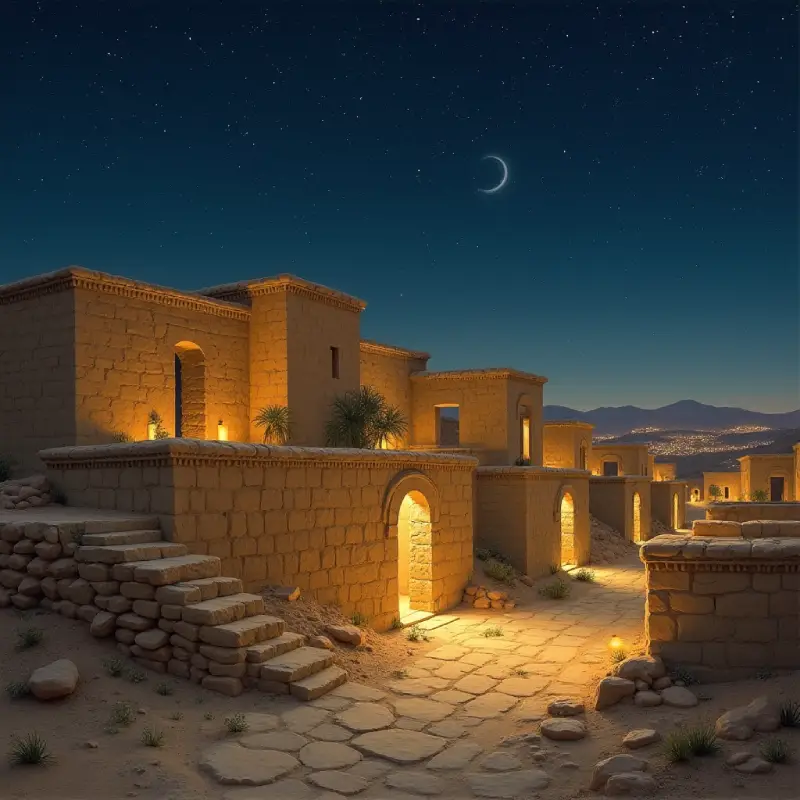
- As for the wall: “It belonged to two orphan boys in the city, and beneath it was a treasure belonging to them. And their father had been righteous. So, your Lord intended that they reach maturity and extract their treasure as a mercy from your Lord. And I did it not of my own accord. That is the interpretation of that which you could not have patience with.” The crumbling wall was rebuilt, not for the ungenerous villagers, but to protect the inheritance of two young orphans, whose righteous father had merited Allah’s protection even after his passing. It was an act of divine mercy, performed in secret, benefiting the innocent, a true testament to the unseen compassion of the Almighty.
Abba Ireati’s Reflection
And so, Musa and Al-Khidr parted ways. Musa had learned lessons far beyond any he could have imagined. He had witnessed firsthand that Allah’s plan is vast and intricate, often hidden behind veils of apparent contradiction and hardship. He learned that what seems evil or unjust to our immediate perception can, in the grand scheme, be an act of ultimate good, a divine mercy.
Now, my dear ones, what can Abba Ireati and his grandchildren take from this magnificent story?
First, Patience (Sabr). Like Prophet Musa, we often rush to judgment. We see an event, we feel a hardship, and our hearts cry out, “Why?!” But this story teaches us to pause, to breathe, and to trust that Allah, the All-Wise, knows what we do not. Every difficulty, every delay, every apparent injustice, might be a shield, a blessing in disguise, a stepping stone to greater good.
Second, Personal Growth through Spiritual Study. Musa, despite his prophethood, remained a seeker. He pursued knowledge, humbling himself before one who held a different kind of wisdom. We, too, must never stop learning about our faith, about the world, and about ourselves. The journey of life is a journey of continuous growth, and humility is its best companion.
Third, A Worldwide Family. Think of the poor fishermen, the believing parents, the righteous father, and his orphan children. Though separated by space and circumstance, they are all connected by the thread of divine care. When we understand this, our hearts soften towards all humanity. We see our shared struggles, our shared hopes, and the universal mercy of Allah enveloping us all. This makes us one family, regardless of where we come from.
Finally, the Realm of the Divine. This story pulls back the curtain, ever so slightly, on the magnificent, complex tapestry of Allah’s planning. It shows us that His knowledge encompasses all, His wisdom is flawless, and His mercy is profound. We may not understand every twist and turn of our lives, but we can rest assured that we are held in the hand of the Most Merciful.
So, my children, when you face something difficult, something that seems unfair or perplexing, remember the story of Musa and Al-Khidr. Look deeper. Have patience. Trust in Allah’s wisdom. And know that even in the most challenging moments, there is a hidden grace, a lesson to be learned, and a profound love guiding your path.
May Allah grant us all the wisdom to see beyond the surface, the patience to endure, and the humility to always remain students on the path of truth.