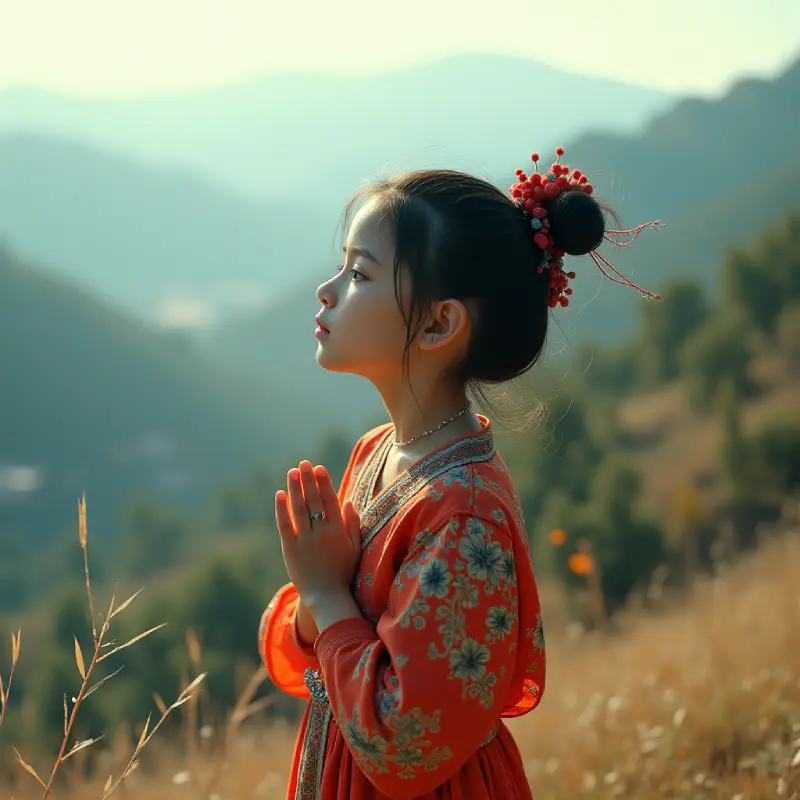

Let me tell you about a land far away, a beautiful place called Japan, and the very old, very gentle way of life that its people have followed for thousands of years. It isn’t a religion like you might know, with a single book or a single person who started it all. No, Shinto is different. It’s like the land itself breathes it. It’s called Shinto, which simply means “The Way of the Gods.”
Imagine a place, a land of mountains cloaked in mist and forests so ancient their roots seem to hold the world together. The people of this land, Japan, did not need a great prophet to tell them about God. They felt the divine in the very air they breathed. They saw the sacred in the sun’s first light on a snowy peak and heard it in the roar of a waterfall. This is Shinto, a way so old it has no beginning you can write down. It is a faith born from the land itself.
They call their gods kami. But do not think of them as beings in a distant heaven. The kami are the souls of the world. They are the fierce spirit of a great storm and the quiet wisdom of a thousand-year-old cedar tree. They live in a babbling brook, in the silent strength of a stone, and in the laughter of a newborn child. The greatest of the kami is Amaterasu, the goddess of the sun, whose gentle light nourishes all life. But a humble rice field also has its own kami, for a simple grain of rice holds a spark of the divine. This belief in the divinity of all things—this reverence for the seen and the unseen—is the beating heart of Shinto.
Shinto does not speak of sin in the way of other religions. It speaks of purity and impurity. Impurity, or kegare, is not evil; it is simply a kind of spiritual dust that gathers on us from sorrow, sickness, or unkindness. Shinto teaches that our natural state is one of purity, and our goal is to return to it. This is why you will see Shinto shrines with a small basin of water near the entrance. You wash your hands and rinse your mouth, a simple act that cleanses not just the body, but the soul. This act of purification, called harai, is a gentle reminder to shed the worries and sorrows of the outside world before you step into a sacred space.
The truest form of purity is found in a sincere heart, what the Japanese call makoto. To live with a sincere heart is to be honest, kind, and true to yourself and to others. It is to live in gratitude for the blessings of the kami. There is no judgment, only a deep and gentle desire to be in harmony. This is why Shinto has endured. It does not demand blind faith but asks for a life of honest, heartfelt respect.
This faith is not held in a book; it is lived in the small rituals of everyday life. The beautiful red gates called torii mark the entrance to a sacred space. To walk through one is to cross a threshold from the ordinary world into a world where the kami dwell.
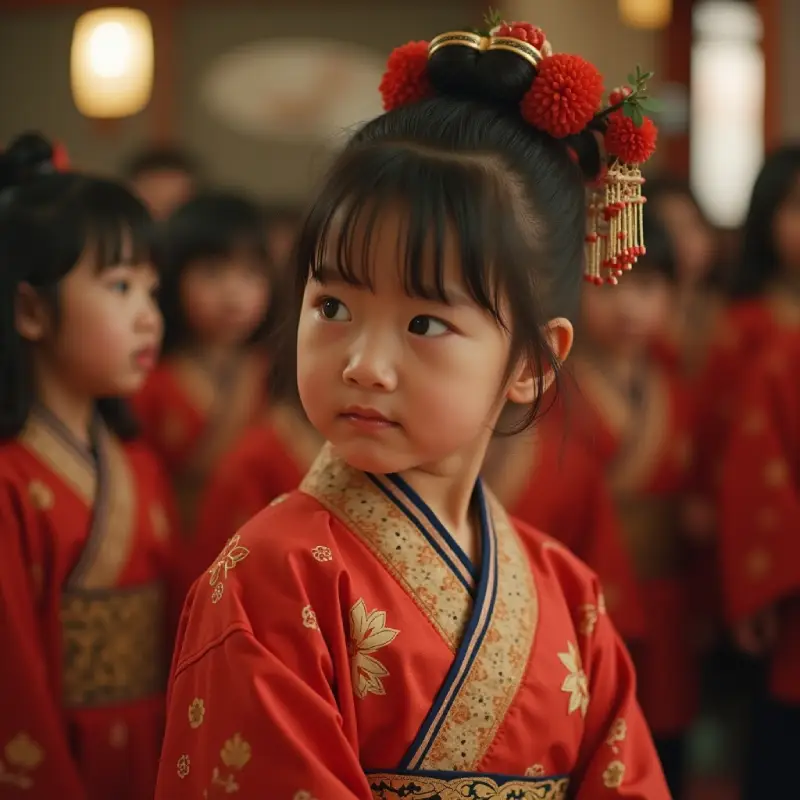
The rituals of Shinto are moments of deep connection. Before a new house is built, a priest will perform a ceremony called Jichinsai, asking the kami of the land for their blessing. It is an act of humility and respect, a promise to be a good steward of the land. At New Year, families visit their local shrine for Hatsu-Mairi, to pray for good fortune and to thank the kami for the year past. And when a child reaches the ages of three, five, and seven, they are taken to the shrine for Shichigosan, dressed in beautiful kimonos to give thanks for their growth and to ask for health in the years to come. These moments are not just traditions; they are threads of love, woven into the fabric of life, linking people to their family, their community, and the divine.
Shinto has not sent missionaries across the seas. It is a quiet religion, and its wisdom is not to be shouted but to be felt. It has not sought to conquer the world, but to live harmoniously within it. Its gentle presence in the Western world, in the form of small shrines or private practices, has not caused great changes. Instead, it has offered a different kind of light to those who have sought it. It reminds us that the divine is not something to be found in a distant place but is here, with us, in the simple beauty of a sunrise, in the love of a family, and in the gentle whisper of the wind through the trees.
The path of Shinto is the path of a heart that is open to the sacredness of the world. It reminds us that we are not just bodies, but beings of light, born from the very dust of the divine. And when you look upon the beauty of a mountain, or the calm of a quiet pond, you are not just looking at nature. You are seeing the face of God, reflected back at you. That, my dear ones, is the deepest truth of Shinto. It is a way of seeing that can turn a simple life into a sacred one.